

Bring colour back into your everyday with cataract surgery in Windhoek

Discover how replacing the cloudy lens can help improve clarity and make everyday activities easier.

Bring colour back into your everyday with cataract surgery in Windhoek

Discover how replacing the cloudy lens can help improve clarity and make everyday activities easier.

Rediscover clearer vision with cataract surgery

Learn more about treatment, and how it could help you enjoy everyday life with greater visual clarity.

See clearly again without the cloudiness

Cataracts can make vision feel less clear and reliable, with colours appearing duller and everyday tasks becoming harder than they used to be. You may find yourself relying on increasingly strong glasses or struggling to see details as clearly as before. Cataract surgery replaces the cloudy natural lens with a clear artificial lens. For suitable patients, this can help restore clearer, brighter vision and make daily activities such as reading, driving, walking and enjoying the outdoors feel easier again.

Feel confident in your vision again

When your vision keeps changing, it can be frustrating and unsettling. You may worry that your sight will continue to deteriorate or feel frustrated by needing stronger glasses and adapting to changing prescriptions. Cataract surgery can offer a clear path forward for suitable patients. With improved vision, you can feel more confident about what you see, less frustrated by everyday visual challenges and reassured that you have taken action to improve your sight and quality of life.

Get back to enjoying your day

Imagine waking up and simply getting on with your day without your vision getting in the way. You head out for a morning walk or yoga session, enjoy a coffee with friends, read comfortably, and see the colours around you more clearly. Later, you might play a round of golf, cycle, travel or enjoy dinner with family. Instead of thinking about changing prescriptions or struggling to see, your attention is where it belongs: on enjoying the day.

See someone who is confident and fully engaged

When your vision no longer feels like a daily limitation, the people around you may notice a difference too. Instead of constantly adjusting glasses, asking others to help you see something or hesitating over activities that have become harder, you can feel more independent and engaged. Friends and family may see you enjoying outings, travelling, spending time with loved ones and pursuing the activities you enjoy with renewed confidence and enthusiasm.

Rediscover clearer vision with cataract surgery

Learn more about treatment, and how it could help you enjoy everyday life with greater visual clarity.

See clearly again without the cloudiness

Cataracts can make vision feel less clear and reliable, with colours appearing duller and everyday tasks becoming harder than they used to be. You may find yourself relying on increasingly strong glasses or struggling to see details as clearly as before. Cataract surgery replaces the cloudy natural lens with a clear artificial lens. For suitable patients, this can help restore clearer, brighter vision and make daily activities such as reading, driving, walking and enjoying the outdoors feel easier again.

Feel confident in your vision again

When your vision keeps changing, it can be frustrating and unsettling. You may worry that your sight will continue to deteriorate or feel frustrated by needing stronger glasses and adapting to changing prescriptions. Cataract surgery can offer a clear path forward for suitable patients. With improved vision, you can feel more confident about what you see, less frustrated by everyday visual challenges and reassured that you have taken action to improve your sight and quality of life.

See someone who is confident and fully engaged

When your vision no longer feels like a daily limitation, the people around you may notice a difference too. Instead of constantly adjusting glasses, asking others to help you see something or hesitating over activities that have become harder, you can feel more independent and engaged. Friends and family may see you enjoying outings, travelling, spending time with loved ones and pursuing the activities you enjoy with renewed confidence and enthusiasm.

Get back to enjoying your day

Imagine waking up and simply getting on with your day without your vision getting in the way. You head out for a morning walk or yoga session, enjoy a coffee with friends, read comfortably, and see the colours around you more clearly. Later, you might play a round of golf, cycle, travel or enjoy dinner with family. Instead of thinking about changing prescriptions or struggling to see, your attention is where it belongs: on enjoying the day.

Clearer vision after cataracts in 3 simple steps

Cataracts gradually make your vision cloudy and dull. Surgery removes the cloudy lens and replaces it with a clear artificial lens. We guide you through each stage


Step 1: Get in touch

The first step is to get a clear answer on which cataract treatment options (like the option to restore your reading vision) will suit you best. Give our friendly team a call on +264 83 727 9300or use our contact form to request an appointment.

Step 2: We’ll meet

At your appointment , we’ll answer your questions and give you a clear and honest recommendation based on your lifestyle. You’ll leave with a confident understanding of the best cataract treatment option for your unique eyes.

Step 3: Enjoy Freedom

After treatment, thousands of people across the country tell us how thrilled they are by the restored clarity of their vision. Those that also choose the option to restore their reading vision, tell us how young they feel now that they can read again without glasses. Most people say that they wish they had done it years earlier!

Take the first step towards clearer vision after cataracts

Book an appointment to learn how cataract surgery can remove your cloudy lens and help restore clearer sight.

Take the first step towards clearer vision after cataracts

Book an appointment to learn how cataract surgery can remove your cloudy lens and help restore clearer sight.

Rediscover clearer vision with cataract surgery

Learn more about the treatment, what to expect and how it could help you enjoy everyday life with greater visual clarity.

Lens replacement surgery is often considered by people in their 40s, 50s and beyond who have age-related changes in near vision and want to reduce their reliance on reading glasses or varifocals. It may also suit people with prescriptions that are not ideal for laser eye surgery. Your eyes must be healthy enough for surgery, so a detailed assessment is essential. Your surgeon will examine your prescription, retina, cornea and general eye health. Your lifestyle and visual goals also matter. Lens replacement is not suitable for everyone, and the final recommendation should follow a full consultation.
Lens replacement surgery removes the eye’s natural lens and replaces it with a clear artificial lens called an intraocular lens, or IOL. This is similar to the technique used during cataract surgery. The artificial lens is selected to match your eyes and visual needs. Depending on the lens chosen, treatment may aim to improve distance vision alone or provide a broader range of vision at near, intermediate and distance. Surgery is normally performed one eye at a time through a very small incision. The new lens remains permanently inside the eye and does not need routine replacement.
The main advantage is the potential to reduce dependence on reading glasses, varifocals or contact lenses. Because the natural lens is removed, it also means that a cataract cannot later develop in that lens. Results are designed to be long-lasting. However, lens replacement is intraocular surgery, meaning surgery takes place inside the eye. Recovery takes time, and not every patient becomes completely glasses-free. Some premium lenses can also cause glare or halos, particularly at night. Choosing the correct lens involves balancing your lifestyle, visual priorities and tolerance for possible optical side effects.
Lens replacement surgery is commonly performed, but all eye surgery carries risk. Possible complications include infection, inflammation, raised eye pressure, swelling in the retina and retinal detachment. Some people experience glare, halos, reduced contrast or difficulty with night vision, particularly with certain multifocal lenses. A small amount of prescription may remain after surgery, meaning glasses or further treatment could still be required. Serious complications are uncommon, but they can affect vision. Your individual risk depends on factors such as your age, prescription and eye health. Your surgeon will discuss these risks during your assessment.
Several types of artificial lens can be used during lens replacement surgery. Monofocal lenses usually provide clear vision at one main distance. Toric lenses can correct astigmatism. Multifocal and extended-depth-of-focus lenses aim to provide a wider range of vision. The best choice depends on your eyes and lifestyle. Alternatives may include reading glasses, varifocals, contact lenses or, for suitable patients, laser vision correction. Your surgeon can explain which options are appropriate after examining your eyes.
Your journey starts with a detailed eye assessment. Measurements are taken to understand your prescription, eye health and the shape and length of your eyes. Your surgeon will then discuss your goals and recommend a suitable lens. On the day of surgery, anaesthetic eye drops are normally used to numb the eye. A tiny incision is made, the natural lens is removed and the artificial lens is inserted. You can usually return home the same day. Follow-up appointments allow your team to check healing, vision and eye pressure as your eyes recover.
The aim of lens replacement surgery is to provide clearer functional vision and reduce reliance on glasses. The exact result depends on your eyes and the type of lens selected. Some people achieve useful vision at several distances, while others may still prefer glasses for tasks such as very small print or prolonged reading. Vision can take time to settle as the eye heals and the brain adapts to the new lens. Results are generally long-lasting because the artificial lens does not age in the same way as the natural lens.

Is worsening vision starting to affect your independence?

If cataracts, changing prescriptions and reading glasses are making daily life harder, booking a cataract assessment can help you understand what is changing and which treatment options may suit you.


Are stronger glasses no longer giving you the clear vision you want?

You may have updated your prescription several times, bought new reading glasses and invested in better lenses, yet your vision still feels less clear than it once did. Colours may look duller and simple tasks can feel harder. This is a common concern for the 65+ cataract patient described in your ideal client profile.

A cataract assessment can confirm what is causing the change in your vision. If cataracts are the cause, surgery is the only way to remove them. Your surgeon can also explain the lens options available and what level of glasses dependence you may expect afterwards.

Are you starting to avoid things you used to enjoy?

Reading in low light can become harder. Road signs may look less clear. Glare can make night driving uncomfortable. You may even find yourself avoiding some journeys altogether. Your patient profile highlights how these small changes can make the world feel less clear and less vibrant.

Cataract surgery removes the cloudy natural lens and replaces it with a clear artificial lens. The aim is to restore clearer vision so everyday activities such as reading, driving, travelling and spending time with family feel easier again.

Are you worried your eyesight could take away your independence?

It is understandable to feel concerned when your vision starts to affect driving, reading, recognising faces or enjoying time outdoors. Many people also worry about complications, choosing the wrong lens or making the wrong decision about surgery. These concerns are reflected strongly in the profile you shared.

A detailed assessment gives you the chance to understand your cataracts, discuss the risks and compare your lens choices. The goal is to help you make an informed decision and protect the independence and active lifestyle that matter to you.

Which cataract surgery option could be right for you?

Take our free 2-minute self-test to explore the lens options that may best suit your eyes, vision needs and lifestyle.

Which cataract surgery option could be right for you?

Take our free 2-minute self-test to explore the lens options that may best suit your eyes, vision needs and lifestyle.

Trusted expertise, backed by professional affiliations

We are proud to be connected with respected professional bodies in eye care.

Looking for answers about your eyes and treatment options?

Explore our latest guides for clear, practical information about eye conditions, treatment choices, recovery and what you can expect before making a decision.

Nothing Found

Lorem ipsum dolor sit amet, consectetur adipiscing elit

Expand your knowledge about laser eye surgery. (These links will take you off our website.)

Your Content Goes Here

Dr  Sven  Obholzer

MBChB (Stell), MMed Ophth (Stell), FC Ophth (SA)

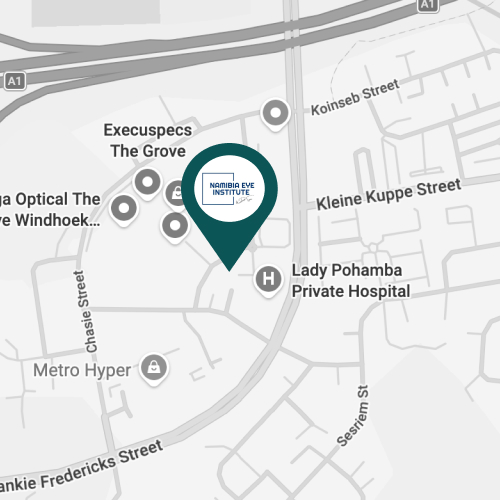
I’m a specialist ophthalmologist with more than 13 years of experience in eye care and microsurgery. I trained at Stellenbosch University and Tygerberg Hospital in Cape Town, where I completed my Master’s Degree in Ophthalmology and Fellowship of the College of Ophthalmologists of South Africa. My main areas of interest include retinal surgery, cataract surgery and anterior segment surgery. As founder of the Namibia Eye Institute, I use modern surgical techniques and advanced technology at Lady Pohamba Private Hospital. My focus is simple: to provide careful, evidence-based treatment that is tailored to each patient.